

Online Chemicals Solution
Yellow Mustard Oil
Yellow Mustard Oil
Couldn't load pickup availability
Yellow Mustard Oil is one of the most deeply rooted carrier oils in Pakistani and South Asian tradition, a warming, stimulating, and intensely nourishing oil that has been central to hair care and body massage routines across the subcontinent for centuries. Pressed from the seeds of Brassica juncea, the golden-yellow mustard plant widely cultivated across Pakistan and the broader region, it carries a distinctive pungent warmth that is immediately recognizable and culturally familiar. Known universally in Urdu as Sarson ka tail (سرسوں کا تیل), it is one of the few carrier oils that works as powerfully in a traditional home remedy as it does in a professional cosmetic formulation. CosmetiHub supplies cosmetic-grade Yellow Mustard Oil from 30G to 1Kg, consistently sourced, cleanly processed, and formulation-ready for hair care, body care, and professional blending applications.
What is Yellow Mustard Oil?
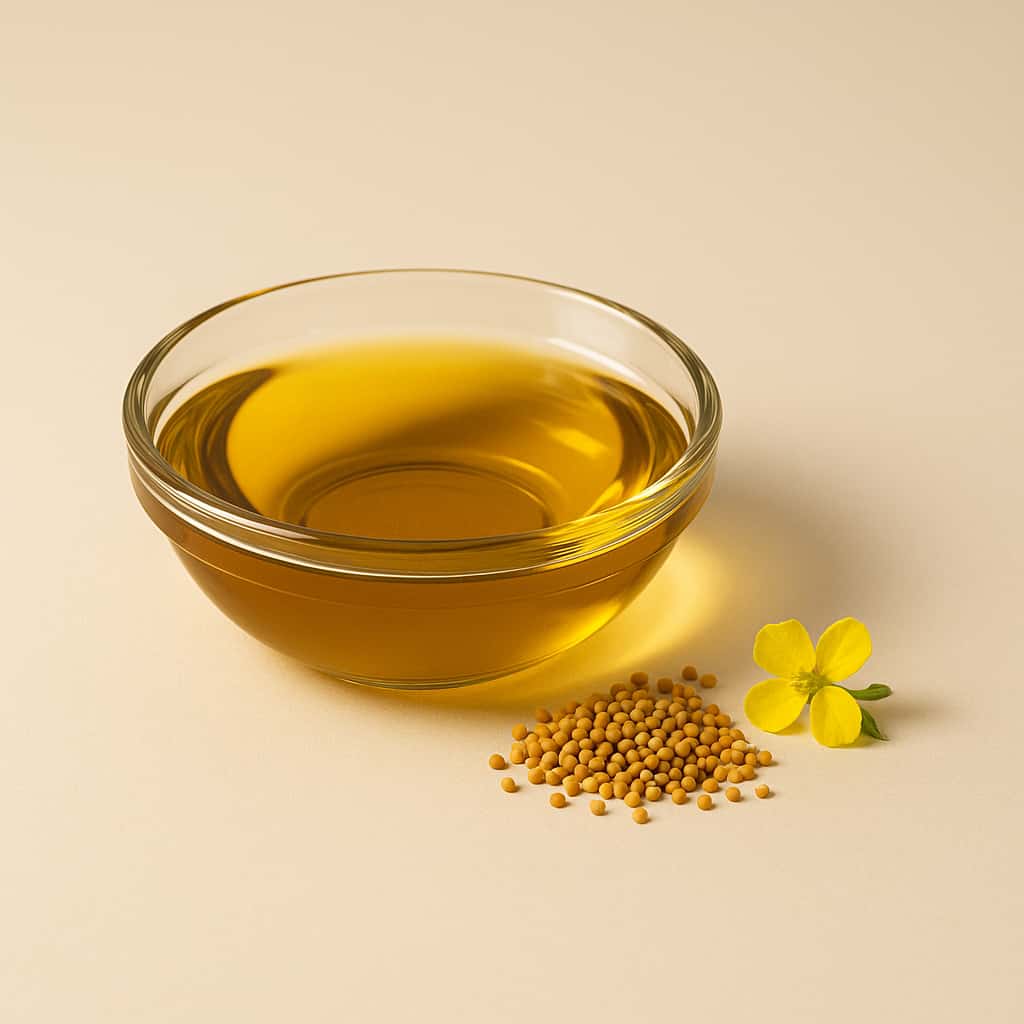
Yellow Mustard Oil is a fixed carrier oil cold-pressed or expeller-pressed from the seeds of Brassica juncea, the brown-to-yellow mustard plant native to and widely cultivated across South Asia. The oil is a rich, deep golden-yellow color, the characteristic shade that gives it its common name, with a distinctly pungent, warming, slightly sharp natural scent driven by its allyl isothiocyanate content, the same compound responsible for the heat in mustard condiment.
Its fatty acid profile is dominated by erucic acid (omega-9, long-chain), with meaningful contributions from linoleic acid (omega-6) and alpha-linolenic acid (omega-3), making it a nutritionally and functionally distinctive carrier oil compared to lighter, milder alternatives. The erucic acid content is the source of both its warming, stimulating effect on the scalp and skin circulation, and the reason food-grade mustard oil carries consumption restrictions in certain international markets, a regulatory point relevant only to internal use, not to cosmetic topical application.
In Urdu it is called Sarson ka tail (سرسوں کا تیل), and it needs no introduction in Pakistani households. It is the oil of traditional winter hair oiling, wedding preparation rituals, newborn massage, and deep body conditioning, a generational staple that predates modern cosmetic formulation by centuries.
Key Benefits
For Hair
- Scalp Stimulation and Circulation: the warming, mildly stimulating effect of mustard oil on scalp circulation is its most well-known and most used property in traditional hair care. Massaged into the scalp, it gently increases blood flow to the hair follicles, supporting the nutrient delivery that healthy hair growth depends on. This mechanism is the foundation of its long-standing reputation as a hair growth oil across South Asia
- Hair Growth Support: the combination of scalp circulation stimulation, essential fatty acid nourishment, and antimicrobial scalp maintenance makes mustard oil a holistic hair growth support oil. Consistent pre-wash scalp massage with Sarson ka tail is one of the most well-established traditional practices for addressing hair thinning and hair fall in Pakistani hair care culture
- Deep Scalp Conditioning: the rich fatty acid profile deeply conditions a dry, flaky, or undernourished scalp. Regular use significantly reduces dryness-driven flaking and itching, creating a healthier scalp environment for sustained hair growth
- Hair Shaft Strengthening: the omega-3 and omega-6 fatty acid content nourishes and conditions the hair shaft from root to tip, reducing mechanical breakage and improving overall strand integrity and resilience with consistent use
- Antimicrobial Scalp Protection: allyl isothiocyanate, the compound responsible for mustard oil's characteristic pungency, has documented antimicrobial properties that help maintain a clean scalp environment, reducing fungal and bacterial activity that can contribute to dandruff and scalp irritation
- Traditional Winter Hair Treatment: Sarson ka tail is the classic winter hair oil in Pakistani tradition, valued for its warming effect that counteracts the dryness and brittleness that cold, dry air causes in hair and scalp
For Body
- Deep Warming Massage Oil: mustard oil is one of the most warming and penetrating body massage carrier oils available. Its natural heat stimulates superficial circulation, relaxes stiff muscles, and provides genuine therapeutic warmth during massage, a quality unmatched by lighter, milder carrier oils
- Traditional Winter Body Oil: deeply embedded in Pakistani and South Asian winter body care practice, applied as a full-body warming and moisturizing oil, particularly for the elderly and for infants in traditional newborn massage (Maalish) practice
- Joint and Muscle Warmth: the warming, circulation-stimulating properties make it a natural base for massage formulations targeting muscle stiffness and joint discomfort, traditionally used across South Asia for these applications
- Deep Skin Conditioning: despite its pungent character, mustard oil is a genuinely nourishing emollient that leaves skin feeling soft and deeply conditioned after massage, with the fatty acid profile supporting the skin lipid barrier over consistent use
Applications
The following are inspirational starting points for incorporating Yellow Mustard Oil into your hair care, body care, and formulation work. Apply based on your specific needs and your skin's individual response.
Traditional Pre-Wash Scalp Oil The most classic and time-tested application. Warm the oil slightly, apply to the scalp in sections, and massage gently with fingertips to stimulate circulation. Leave on for at least 30–60 minutes or overnight for a deeper conditioning treatment, then wash out thoroughly with shampoo. This is Sarson ka tail in its most traditional and effective form, the ritual that has been passed through generations of Pakistani families for good reason.
Warming Winter Hair Oil Blend Incorporate Yellow Mustard Oil into a warming winter hair oil blend alongside Bhringraj Oil, Black Seed (Kalonji) Oil, and Fenugreek (Methi) Oil from CosmetiHub. This combination draws on multiple traditional South Asian hair care ingredients simultaneously, scalp stimulation from mustard, follicle nourishment from Bhringraj, DHT-reducing and antimicrobial support from Black Seed, and scalp conditioning from Fenugreek. A genuinely comprehensive traditional hair growth formulation.
Deep Body Warming Massage Oil Use Yellow Mustard Oil as the primary carrier for a warming body massage, either alone or blended with other carriers to moderate the intensity of its heat. Add Peppermint Essential Oil or Rosemary Essential Oil from CosmetiHub at low dilution for additional circulatory stimulation. The combination of mustard's warming erucic acid character with peppermint's menthol cooling creates a classic hot-cold contrast massage experience.
Traditional Newborn and Infant Maalish Sarson ka tail is the traditional oil used in Pakistani newborn massage (Maalish) practice, the winter warming and skin conditioning ritual applied to infants in the first months of life. For this application, use pure, cleanly sourced cosmetic-grade mustard oil without any essential oil additions, as infant skin is significantly more sensitive than adult skin.
Hair Growth Oil for Formulators Incorporate Yellow Mustard Oil into professional hair growth oil formulations as a warming, stimulating base carrier. Combine with Onion Oil for sulfur-compound synergy, Rosemary Essential Oil for vasodilation, and Bhringraj Oil for traditional strengthening properties. This multi-ingredient approach addresses scalp circulation, follicle nourishment, and antimicrobial maintenance from several angles simultaneously.
Technical Specifications
| Property | Value |
|---|---|
| INCI Name | Brassica Juncea Seed Oil |
| Botanical Source | Brassica juncea (Yellow/Brown Mustard), pressed from seeds |
| Extraction Method | Cold-Pressed / Expeller-Pressed |
| Appearance | Deep golden-yellow, rich and distinctly colored |
| Odor | Characteristic pungent, warming, sharp mustard note |
| Density | ~0.913 g/ml at 20°C |
| Key Fatty Acids | Erucic Acid (omega-9, long-chain): 30–45%, Linoleic Acid (omega-6): 15–20%, Alpha-Linolenic Acid (omega-3): 8–12%, Oleic Acid: 10–15% |
| Key Actives | Allyl Isothiocyanate (warming, antimicrobial), Glucosinolates, Vitamin E, Selenium |
| Warming Character | High — strongly stimulating on scalp and skin circulation |
| Storage | Store in a cool, dry, and dark place. Keep the bottle tightly sealed. |
| Grade | Cosmetic Grade |
| Available Sizes | 30g · 125g · 500g · 1Kg |
Safety Information
Skin Sensitivity: Mustard oil is a potent and warming carrier oil. Some individuals, particularly those with sensitive skin, may experience redness, tingling, or mild irritation on prolonged direct skin contact, especially on the face or delicate areas. Always conduct a patch test before first full application. Avoid use on broken, inflamed, or compromised skin.
Eye Contact: Keep away from eyes. If contact occurs, rinse immediately and thoroughly with clean water.
Infant Use: For traditional infant Maalish application, use pure cosmetic-grade mustard oil without any essential oil additions. Infant skin has a significantly thinner barrier than adult skin and is more sensitive to the warming compound content of mustard oil. Apply gently and monitor skin response.
Erucic Acid Note: Yellow Mustard Oil is high in erucic acid, a long-chain fatty acid that is the subject of food consumption restrictions in certain international markets including the EU, USA, and Canada when used internally. These restrictions apply to dietary use only. For topical cosmetic application, mustard oil has a long and well-established safety history and is widely used across South Asia without issue.
Not for Internal Use: Supplied for external cosmetic use only.
Patch Test Required: Conduct a patch test on a small area of skin 24 hours before first full application.
Frequently Asked Questions
What is Yellow Mustard Oil called in Urdu? It is universally known as Sarson ka tail (سرسوں کا تیل), meaning oil of the mustard plant. It is one of the most culturally embedded carrier oils in Pakistani and South Asian tradition, used for hair care, body massage, and infant care across generations.
Why does mustard oil feel warm on the skin? The warmth comes from allyl isothiocyanate, a natural compound in mustard seeds that mildly stimulates the skin's heat receptors and increases local circulation. This is the same compound that gives mustard condiment its characteristic sharpness. On the scalp and body, this warming stimulation supports blood flow and gives mustard oil its traditional reputation as a deeply penetrating, stimulating massage oil.
Is mustard oil safe for infant Maalish? Yes, within the traditional Pakistani practice of newborn and infant massage using pure, undiluted mustard oil. It should be used without any essential oil additions for infant application, as infant skin is more sensitive to concentrated botanicals. The warming effect is mild when the oil is applied with a light massage and is part of a centuries-old safe practice in the region. If in doubt, consult your healthcare provider.
Why is mustard oil restricted for food use in some countries? The restriction in markets like the EU, USA, and Canada relates to the high erucic acid content of mustard oil when used as a cooking and dietary oil. These are food safety regulations with no bearing on topical cosmetic use. For skin and hair application, mustard oil has an entirely clean safety profile and a multi-century record of traditional use across South Asia.
Does mustard oil help with hair growth? Mustard oil supports the conditions the scalp needs for healthy hair growth, improved circulation, antimicrobial scalp maintenance, and deep follicle nourishment from its fatty acid profile. It does not regrow hair where follicles are permanently inactive, but for hair thinning related to poor scalp circulation, nutritional deficiency at the follicle level, or scalp inflammation, consistent Sarson ka tail massage is one of the most traditional and practical interventions available in Pakistani hair care.
Does the pungent smell of mustard oil wash out? Yes. When used as a pre-wash treatment and washed out with shampoo, the characteristic mustard odor does not linger significantly on the hair after cleansing. For leave-on applications or blends where the scent needs moderation, adding Peppermint Essential Oil or Rosemary Essential Oil from CosmetiHub effectively manages the overall aromatic character of the blend.
What CosmetiHub products work best with Yellow Mustard Oil? For a comprehensive traditional hair growth blend, combine with Black Seed (Kalonji) Oil, Bhringraj Oil, Fenugreek (Methi) Oil, and Onion Oil, all available at CosmetiHub. For a warming scalp massage with added vasodilation, add Rosemary Essential Oil or Peppermint Essential Oil. For a warming body massage blend, combine with Peppermint Essential Oil for a hot-cold contrast effect.
Why Choose CosmetiHub?
At CosmetiHub, we supply Yellow Mustard Oil at cosmetic grade quality, consistently sourced, cleanly processed, and formulation-ready. The difference between grocery-shelf mustard oil and cosmetic-grade Sarson ka tail is in the sourcing consistency, processing hygiene, and purity verification that professional skin care and hair care formulation demands. Whether you are making a traditional pre-wash scalp oil, building a professional hair growth blend, or formulating a warming winter body massage oil, our Yellow Mustard Oil delivers the authentic warming character and nourishing fatty acid profile that makes this centuries-old ingredient worth using.
Suitable for traditional hair care enthusiasts, professional hair care formulators, massage therapists, body care product makers, and anyone building a warming, stimulating hair or body care routine rooted in South Asian tradition.
Share