


Online Chemicals Solution
Cedarwood Essential Oil
Cedarwood Essential Oil
Couldn't load pickup availability
Cedarwood (Devdar / دیودار) Essential Oil
Cedarwood has one of the longest documented histories of any aromatic material in human use. Ancient Egyptians used cedar derivatives in embalming, perfumery, and wood preservation. In the Indian subcontinent, Devdar (دیودار), meaning "timber of the gods," was prized in Ayurvedic and Unani medicine for its astringent, anti-inflammatory, and sedative properties. It was applied to skin conditions, used as an insect repellent, and burned as incense for its grounding, calming effect on the mind. Modern extraction and research have since identified the specific compounds responsible for these effects, giving formulators a clear rationale for its inclusion in skincare, haircare, and wellness products. This is an oil with genuine functional depth, not just a heritage claim.
What is Cedarwood (Devdar) Essential Oil?
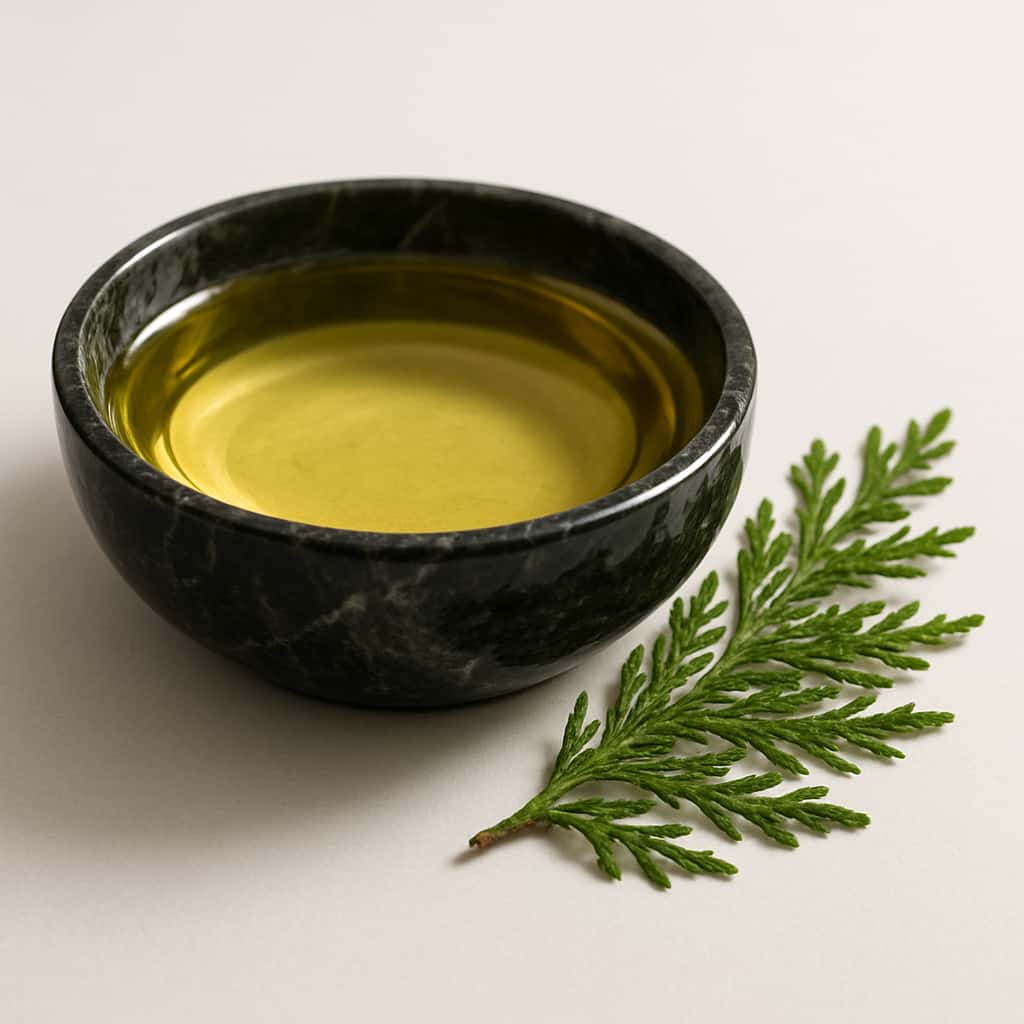
Cedarwood Essential Oil is steam-distilled from the wood, stumps, or sawdust of cedar species. The most commercially relevant varieties are Cedrus atlantica (Atlas Cedarwood, Morocco), Juniperus virginiana (Virginian Cedarwood, USA), and Cedrus deodara (Himalayan Cedarwood, native to the Hindu Kush and Western Himalayas). Each variety produces a slightly different chemical profile, but all share the core sesquiterpene composition that defines cedarwood's functional and olfactory character. The primary active constituents include cedrol, cedrene, and thujopsene. Cedrol, in particular, is the compound most studied for its sedative, anti-inflammatory, and antimicrobial activity. The oil is a viscous, pale yellow to amber liquid with a warm, dry, woody base note that is widely used in both perfumery and functional cosmetics.
Key Benefits
For Skin
Sebum Regulation and Acne Management. Cedarwood oil is an astringent by nature. It tightens pores and modulates sebaceous activity, making it a logical active in formulations targeting oily and acne-prone skin. Its antimicrobial properties add a secondary layer of utility by suppressing Propionibacterium acnes proliferation, the primary bacterial driver of inflammatory acne.
Anti-inflammatory Action. Cedrol and related sesquiterpenes have demonstrated anti-inflammatory activity in published research, supporting the traditional use of cedarwood preparations for skin redness, irritation, and conditions involving chronic low-grade inflammation such as eczema and psoriasis. This does not make it a treatment for these conditions. It makes it a rational supportive ingredient in formulations addressing them.
Wound Healing Support. Cedarwood oil has shown mild wound-healing properties attributed to its ability to promote cell regeneration and reduce microbial burden at the wound site. At appropriate dilutions, it is a reasonable addition to repair-focused balms and scar-minimizing formulations.
Insect Repellent Activity. Cedrol is a documented natural insect repellent. This is not a minor or anecdotal claim. It is the basis for cedarwood's industrial use in wood preservation and moth deterrence. In cosmetic applications, this translates cleanly to repellent lotions, outdoor body oils, and camping-context skincare.
For Hair
Scalp Health and Dandruff Control. The antifungal properties of cedarwood oil, active against Malassezia species which are the primary fungal contributors to dandruff, make it a functional ingredient in anti-dandruff shampoos and scalp treatments. It addresses the root cause rather than just masking the symptom.
Hair Loss and Thinning. A 1998 study published in the Archives of Dermatology found that a blend including cedarwood oil, applied with carrier oils to the scalp over seven months, produced statistically significant improvements in alopecia areata in 44% of treated subjects compared to 15% in the control group. Cedarwood was one of four oils in that blend, so isolating its individual contribution is not straightforward. The data is real but must be presented with that caveat. It supports inclusion in hair growth formulations, not a standalone cure claim.
Conditioning and Scalp Circulation. Cedarwood oil applied to the scalp is believed to stimulate local circulation, supporting follicular nutrient delivery. This mechanism is plausible and consistent with the broader evidence on aromatic sesquiterpenes and dermal blood flow, though direct human studies are limited.
Scent Profile
Cedarwood Essential Oil has a warm, dry, woody base note with a subtle earthy and slightly balsamic undertone. It is soft and non-intrusive compared to more aggressive woods like vetiver or patchouli. The drydown is clean and long-lasting, which is why it functions as a fixative in perfumery, slowing the evaporation of more volatile top and heart notes. It blends seamlessly with sandalwood, vetiver, frankincense, bergamot, lavender, rose, and citrus oils. In masculine and unisex fragrance construction, it is a foundational base material.
Technical Specifications
| Parameter | Detail |
|---|---|
| INCI Name | Cedrus Atlantica Bark Oil / Juniperus Virginiana Oil (varies by origin) |
| Appearance | Pale yellow to amber viscous liquid |
| Odor | Warm, dry, woody, balsamic, slightly earthy |
| Solubility | Soluble in alcohol and fixed oils; insoluble in water |
| Grade | Cosmetic / Aromatherapy |
| Available Sizes | 10ml, 30ml, 100ml, 500ml, 1 Litre |
Safety, Allergens & Honest Disclosures
Dilution is mandatory. Cedarwood Essential Oil must not be applied undiluted to the skin. Standard working dilution for facial formulations is 0.5-1%. For body and hair applications, 1-3% is appropriate. Higher concentrations do not improve performance and increase sensitization risk.
Not recommended during pregnancy. Cedarwood oil has historically been associated with uterine stimulant activity. The evidence is not conclusive in modern literature, but the precautionary position is to avoid use during pregnancy, particularly in the first trimester. This is a non-negotiable disclosure.
Known allergens (IFRA/EU Cosmetics Regulation): Cedarwood oil may contain naturally occurring limonene at trace levels. Products formulated for the EU market must evaluate and declare allergen thresholds per Regulation No. 1223/2009. Atlas Cedarwood (Cedrus atlantica) is additionally regulated under IFRA guidelines, and current IFRA standards impose usage rate limits in certain product categories. Formulators working toward export markets should verify current IFRA amendment standards before finalizing concentrations.
Patch test recommended for first-time users and those with known sensitivity to conifer-derived botanicals.
Viscosity note for formulators. Cedarwood oil is more viscous than most essential oils, particularly at lower ambient temperatures. Gentle warming in a water bath before measuring will improve accuracy and prevent pipetting errors.
This product is a raw cosmetic material intended for formulation, dilution, and professional use. It is not a finished consumer product and is not intended for internal use.
Cosmeti Hub supplies cosmetic-grade raw materials for formulation purposes. All benefit statements are based on available published research and are provided for educational and formulation guidance only. Results in finished products will vary based on formulation, concentration, and individual skin type.
Share

I received the parcel damaged and powder was leacking out and several were mixed